Da capo sine fine
Oscar Bony
Camille Brée
Anna de Castro Barbosa
Juan Gugger
Hélène Janicot
Dilara Koz
Seung Won Kwon
Adrien Lagrange
Patricio Lima Quintana
Lyz Parayzo
Hanna Rochereau
Mick Schmitt
Taras
Curated by Julia Tavares & Amalia Mytilineou
March 14 — May 9, 2026

Da capo is a musical instruction meaning from the beginning. Combined with the phrase sine fine, without end, an eternal musical loop is created. Unless the conductor orders the performers to stop, the piece contains no ultimate resolution within itself – Da capo sine fine.
Scottish psychoanalyst R.D. Laing coined this phrase in his book of dialogue-scenarios Knots (1970), appropriating it from music and transposing it into the relational sphere. In it, he sought to describe the cyclical, self-contained and self-reinforcing semantic knots that exist in human relationships. In this same decade, a moment when the intellectual sphere was grappling with the Grand Narratives of Marxism, psychoanalysis, and structuralism, Roland Barthes wrote his seminal text on love Fragments d’un discours amoureux (1977). Barthes broke love into its smallest linguistic units – speech, gestures, states, suspensions – revealing how amorous feeling is performed, endlessly repeated and deferred.
To Barthes, love is not a feeling but a posture one inhabits, a performative stance, a figure one actively embodies – a Lover at work. To Laing, relationships – whether they be amorous or familial – are encapsulated and performed through linguistic patterns. Read alongside one another, these texts reveal a shared interest in how subjects become trapped inside their own and others’ projections. These semantic loops do not resolve; they fold back on themselves. Meaning does not advance; it returns. The subject does not stand alone but emerges through language, in relation and in repetition. It is this dialectical logic of endless return that structures the exhibition.
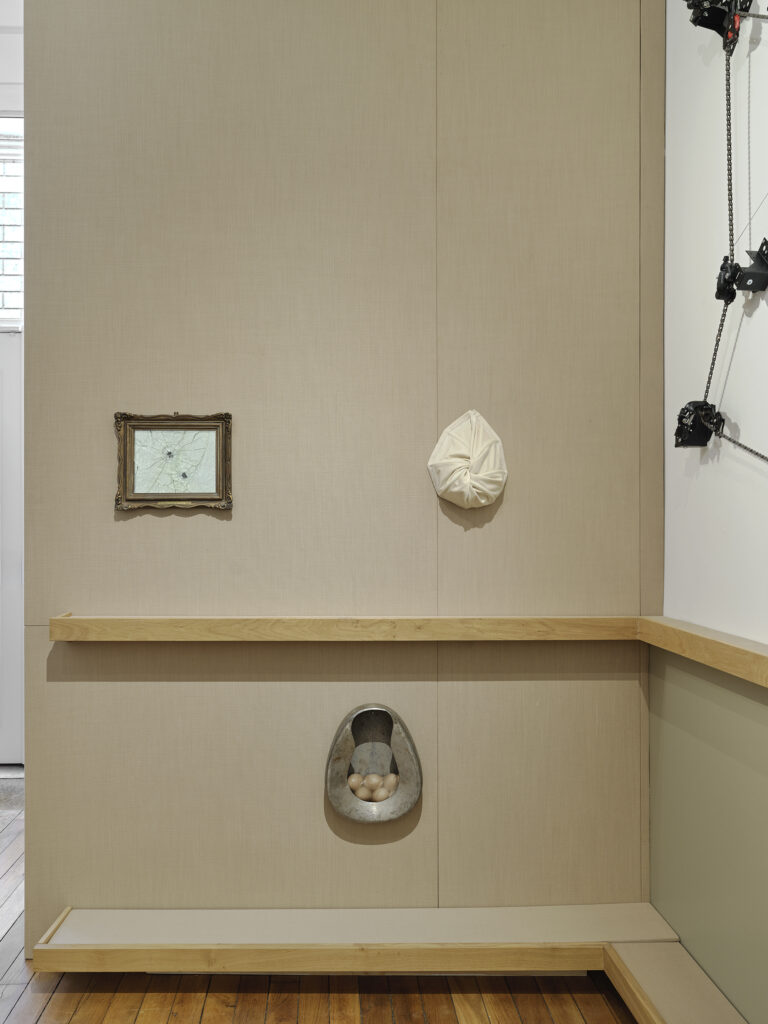
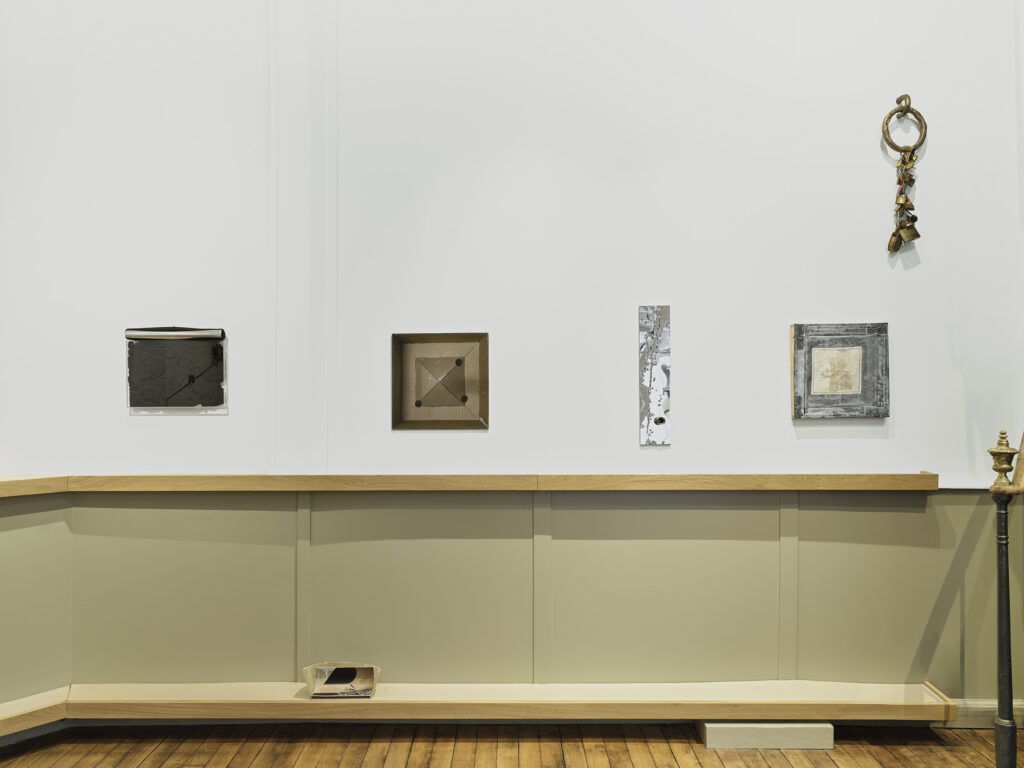
The works in the exhibition approach these questions from different points of departure: through the enactment of systems of interdependence, the staging of ritualised codes of desire, or the material traces of encounters – ranging from the violent to the tender. Each, a fragment that negotiates with the unique tensions that are embedded in attachment – the need for closeness always carries with it the potential for danger.
Julia Tavares & Amalia Mytilineou
More info on the Da capo sine fine website