Franziska Krumbachner, Filling gaps
01.16 — 03.07.2026
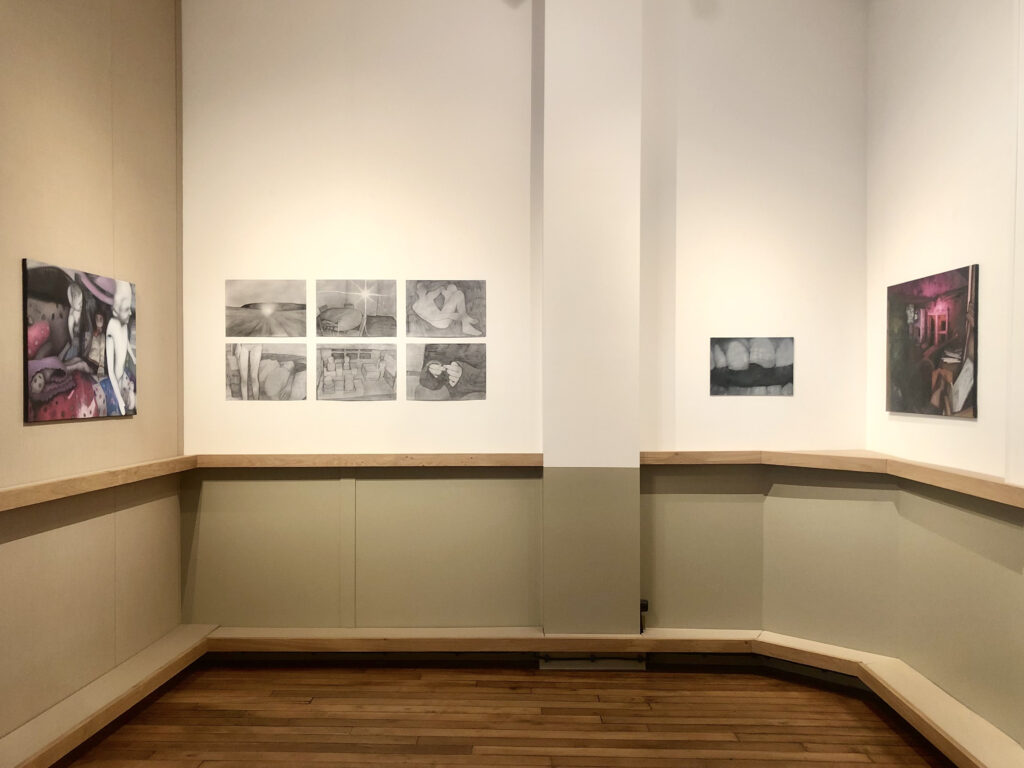
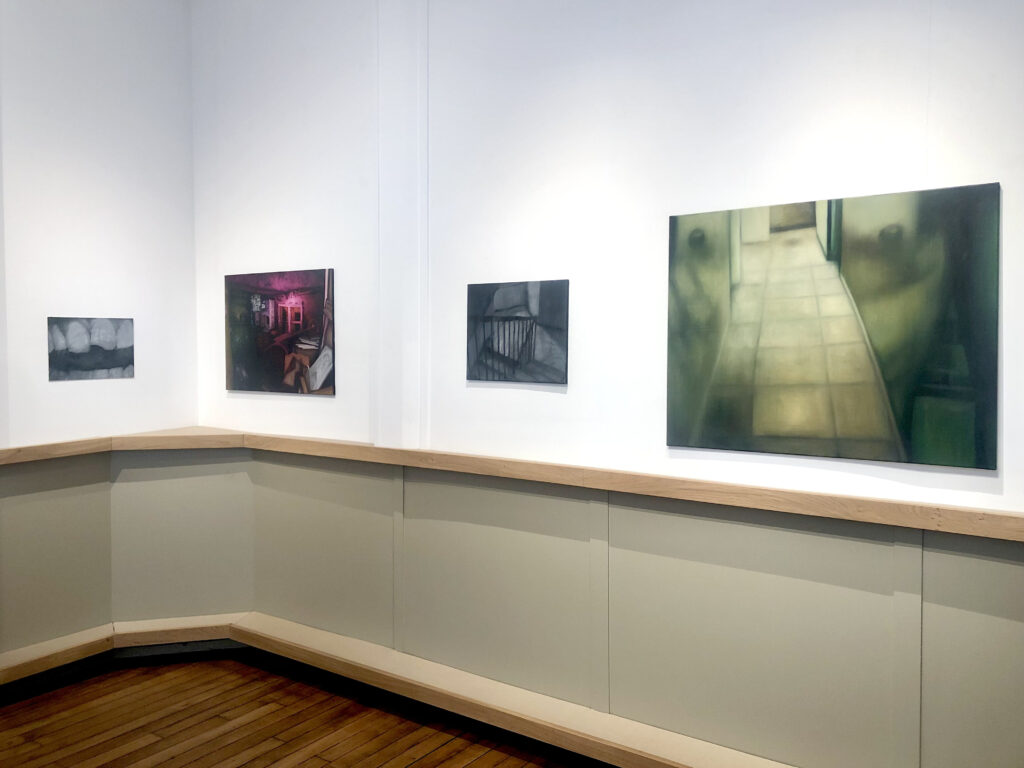
The work of Franziska Krumbachner (born in 2002) is rooted in a deeply introspective and autobiographical approach. It resembles a diary driven by the urgency to give a tangible form to lived experience. Paintings and drawings assemble fragments of an often traumatic memory, as the artist confronts her inner wounds. “I am an oil painter, and my art is much more than just a form of expression—it is my language, my anchor. […] It helps me make the unspeakable visible and navigate a world that often feels overwhelming.” (Statement collected on the occasion of the group exhibition And This is Us 2025 – Young Artists Based in Frankfurt, Frankfurter Kunstverein, Germany, 2025).
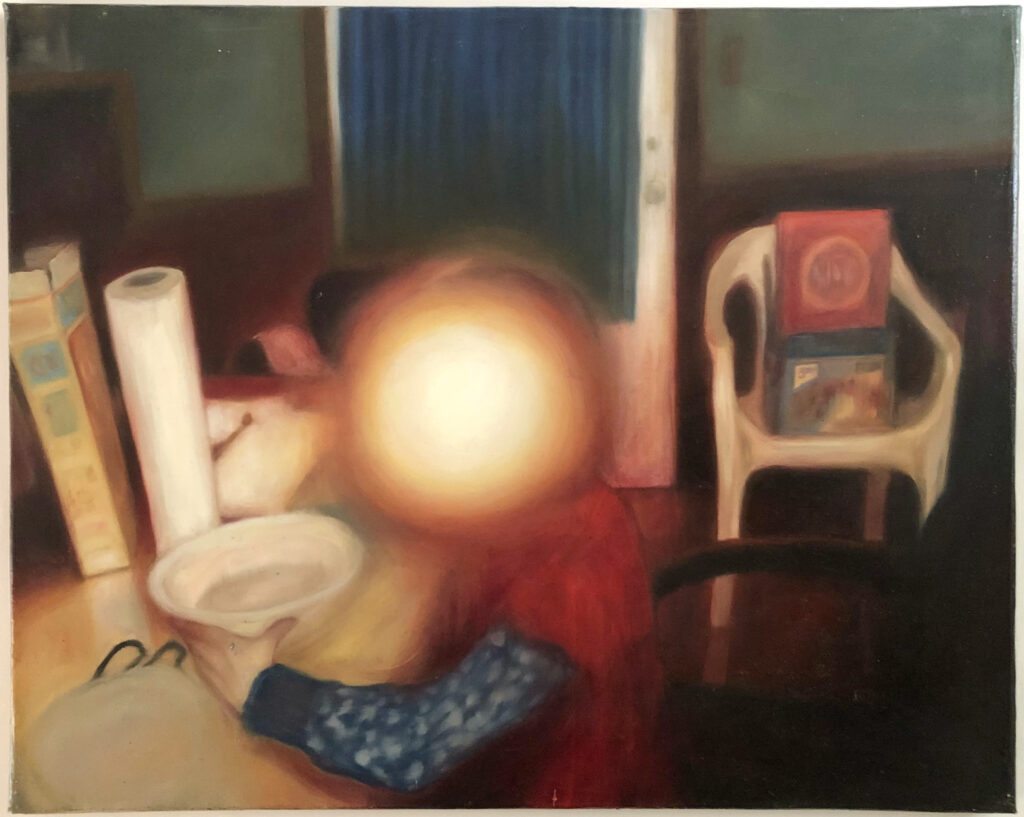
The theme of childhood occupies an important place in her artworks. Through her portraits of children, as well as multiple references—dolls, stuffed animals, playgrounds—the artist evokes this crucial period when one is vulnerable, dependent, without clear moral reference points or the capacity for expression. Childhood appears here as a time of extreme exposure to the world, during which invisible fractures open up and go on to leave lasting marks on memory and the body.
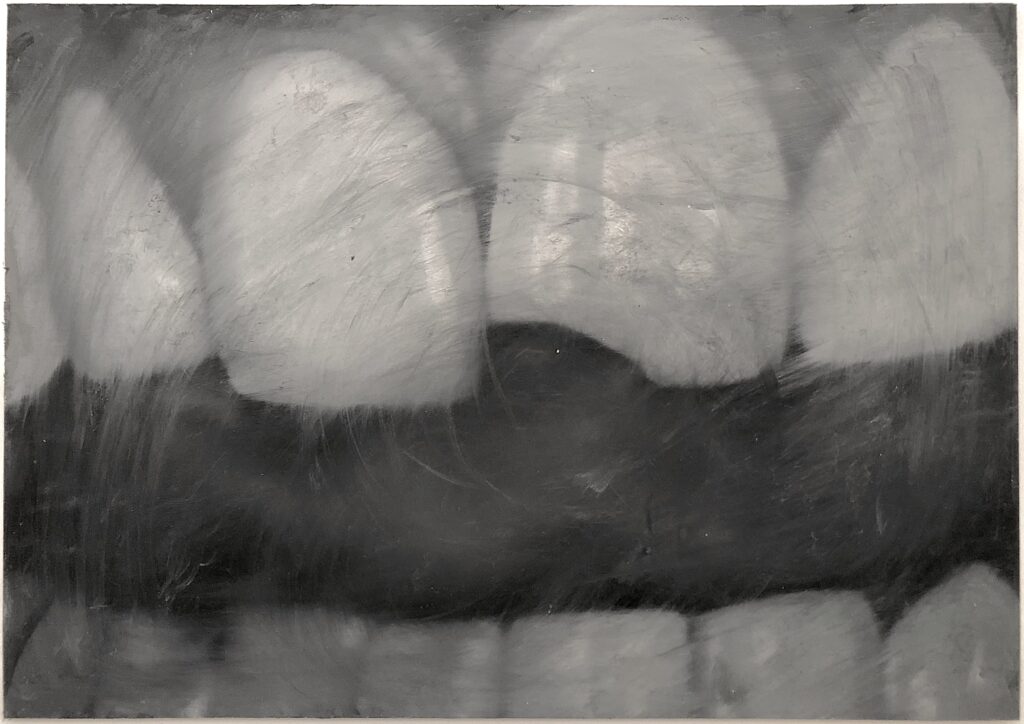
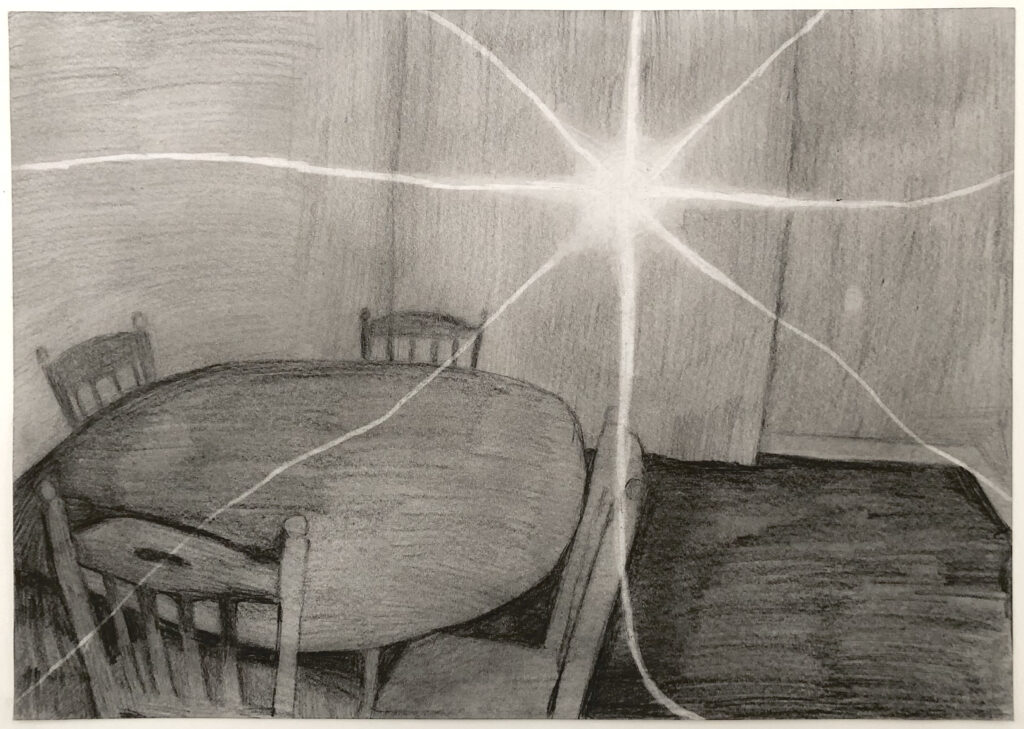
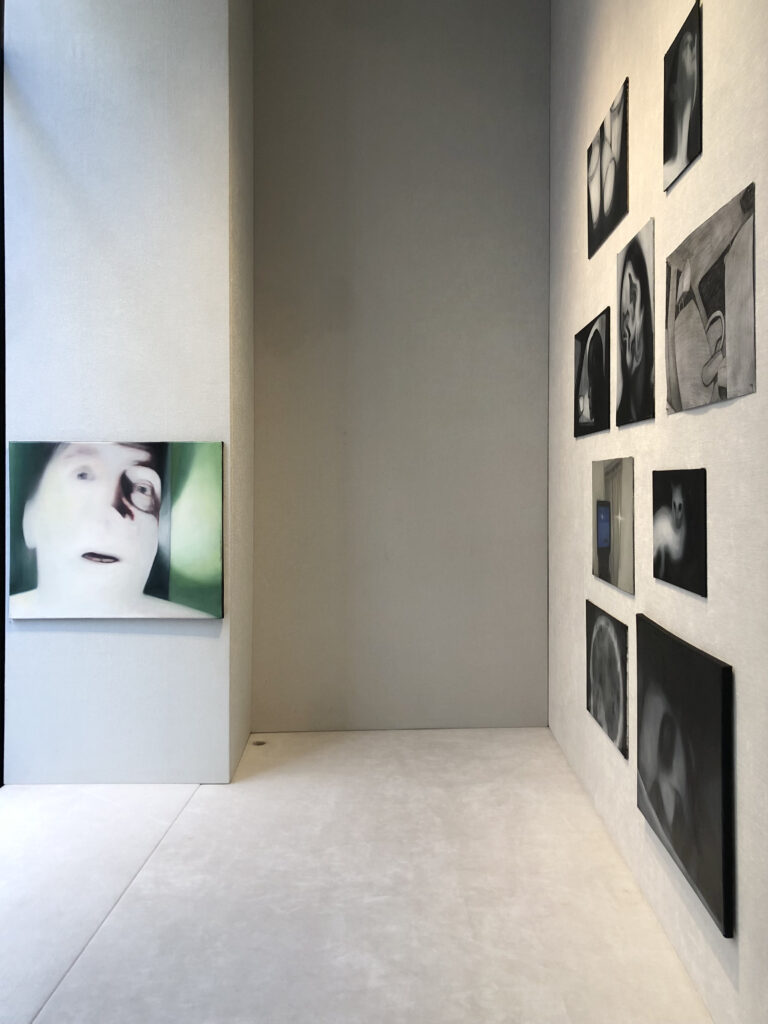
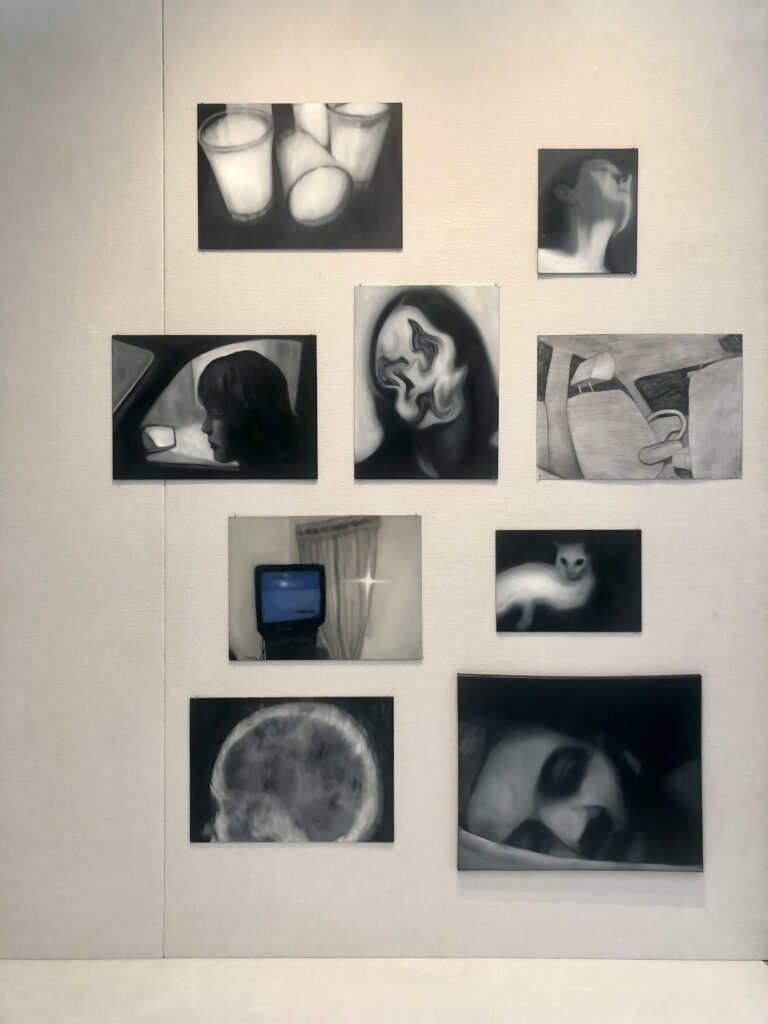
Other recurring motifs — confined spaces, car interiors, narrow corridors, curled-up bodies, or distorted faces — originate in dreams and memories that resurface like flashbacks. Each image, each vision, seems to lead back to the place of a sudden rupture. They invoke an implicit event, a story that can be sensed without ever fully revealing itself, yet whose emotional stakes assert themselves unmistakably. Everything is suggested: a table, empty chairs, a house, a simple face are enough to powerfully convey solitude, pain, and fragility. This is where the intensity of her work lies, in its narrative dimension born from the tension between what is revealed and what is repressed.
This sense of narrativity is further emphasized by viewing angles that recall the language of cinema and photography. The works appear as snapshots captured through the gaze of a protagonist immersed in the scene. The viewer is thus drawn in, placed in the position of a witness rather than a voyeur. This way of directing the gaze and confronting figures and objects undoubtedly owes much to a singular use of imagery.
While Franziska Krumbachner draws the core of her material from lived experiences, she also relies on personal photographs or images gathered online. These serve as an anchor, a point of departure from which she then develops a vision freed from its model, and even from reality itself. Although her work is based on precise and meticulous drawing, it breaks indeed with realism. This is evident in the strange rays of light that burst toward the viewer, underscoring the symbolic importance of a place or an object. Or in the technique of scraping and rubbing the paint, particularly in compositions executed in grisaille. More significantly still, the artist has developed an experimental practice of digital collage, whose hybrid compositions are subsequently transposed onto canvas. Through subtle plays of transparency, she layers heterogeneous elements, translating the complex sedimentation of memory and the coexistence of different temporalities and different realities within a single mental space.
Franziska Krumbachner studied at the Hochschule für Gestaltung Offenbach, Germany. Her work has notably been presented in the group exhibition And This is Us 2025 – Young Artists Based in Frankfurt, Frankfurter Kunstverein, Germany, 2025. Filling gaps is her very first gallery exhibition.