Muyeong Kim & Louis-Léopold Boilly
May 13 — July 18, 2026
The practice of South Korean artist Muyeong Kim (born 1995, based in Seoul) combines installation, photography, and performance. Through devices that evoke both theatre, early photographic techniques, and primitive optical machines, he develops a formal and theoretical reflection on the question of the gaze. The history of optics — from the simple magnifying lens to surveillance cameras — is approached as a long process of refining visual systems designed to produce illusion and submission.
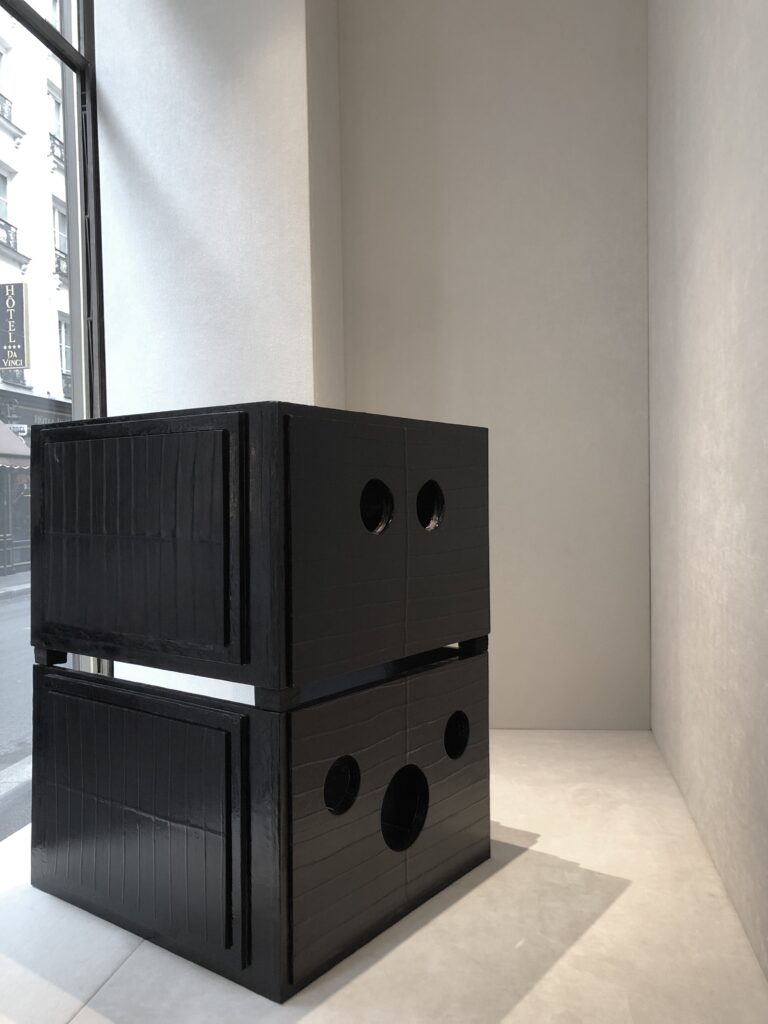
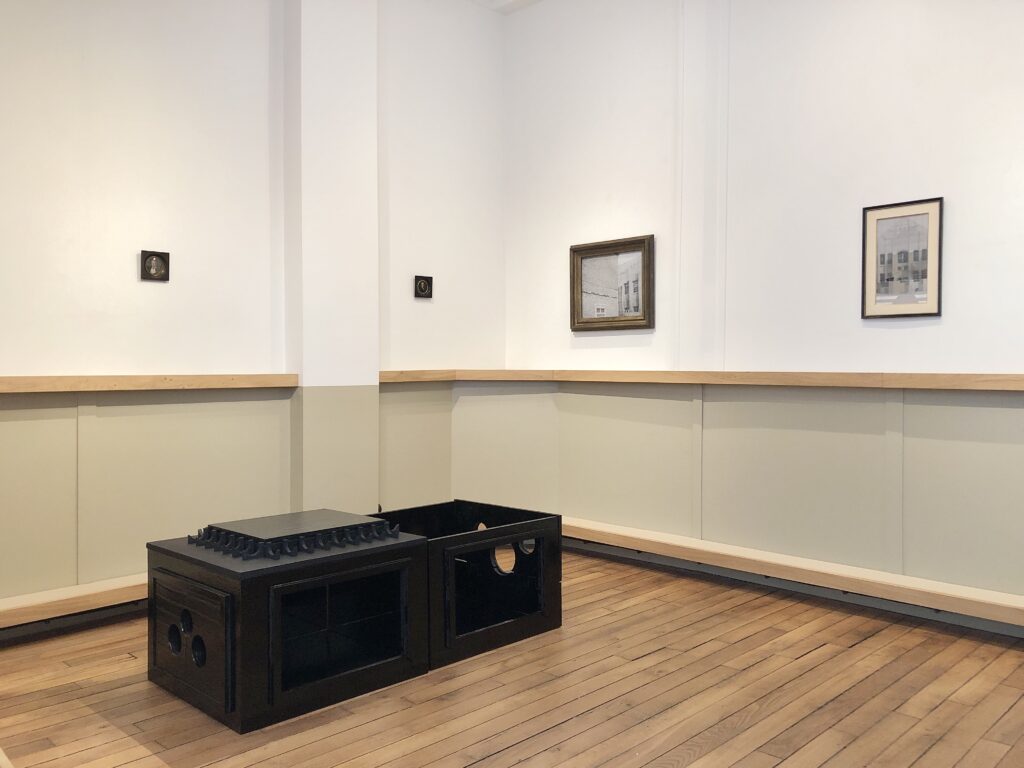
From this perspective, Kim is interested in the history of magic and circus as forms of entertainment grounded in discriminatory logics toward marginalized individuals. This darker side of popular spectacle is at the core of Lady Sawn in Half (2025), a piece inspired by the famous illusion of the woman cut in half. By staging two boxes capable of imprisoning a reclining person, Kim does not seek to reveal the secret of a sensational trick, but instead the female body potentially trapped within this machine: at once an object of misogynistic desire for the spectator and an object of domination in the hands of the magician. Through its formal analogies with instruments of execution or discipline — guillotine, pillory — Lady Sawn in Half highlights the disturbing proximity between spectacle and coercion, or how the pleasure of looking is inseparable from a form of violence, whether symbolic or real.
Rather than directly denouncing these mechanisms, the artist seeks to render them perceptible through shifts and transformations. His works often rely on the reconfiguration of existing objects. The addition of a bellows to one of the structures in Lady Sawn in Half, for instance, gives it the appearance of an antique camera with unsettling proportions. Similarly, its coating of urushi lacquer combined with eel and pig skin diverts attention from the object itself toward its strange, living, granular surface. Made from the same ingredients as traditional female makeup — shell powder and minerals, the toxicity of which have now been proven — the intermediate layers of this lacquer also subtly reinforce the critique of the norms imposed on women.
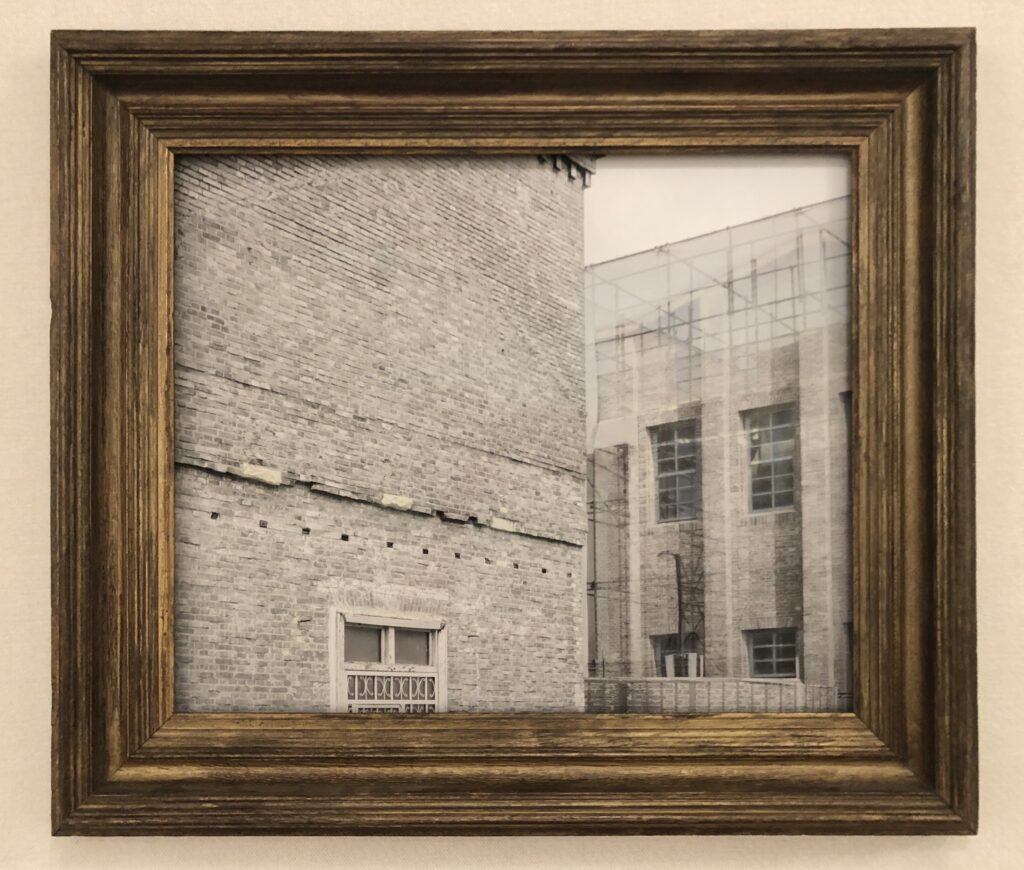
Alongside his installations, Kim develops a photographic practice based on historical techniques. In his latest series, he draws inspiration from hand-colored black-and-white photography, a practice that disappeared after the widespread adoption of color at the turn of the 20th century. Using an infrared lens, he produced monochrome images of Seodaemun prison in Seoul, a complex built by the Japanese during the occupation of Korea. Currently under renovation, the building is covered with a trompe-l’œil reproducing its own façade. Yet the perforated covering reveals, in filigree, what it conceals: the prison architecture, its bricks, the network of scaffolding. The building thus appears doubled, slightly displaced, as though subject to another form of makeup, with the coloring of the images constituting the final gesture of this makeup. The photographs are displayed in 19th-century frames from the Jocelyn Wolff Gallery’s collection, thereby continuing this dialogue with historical forms.
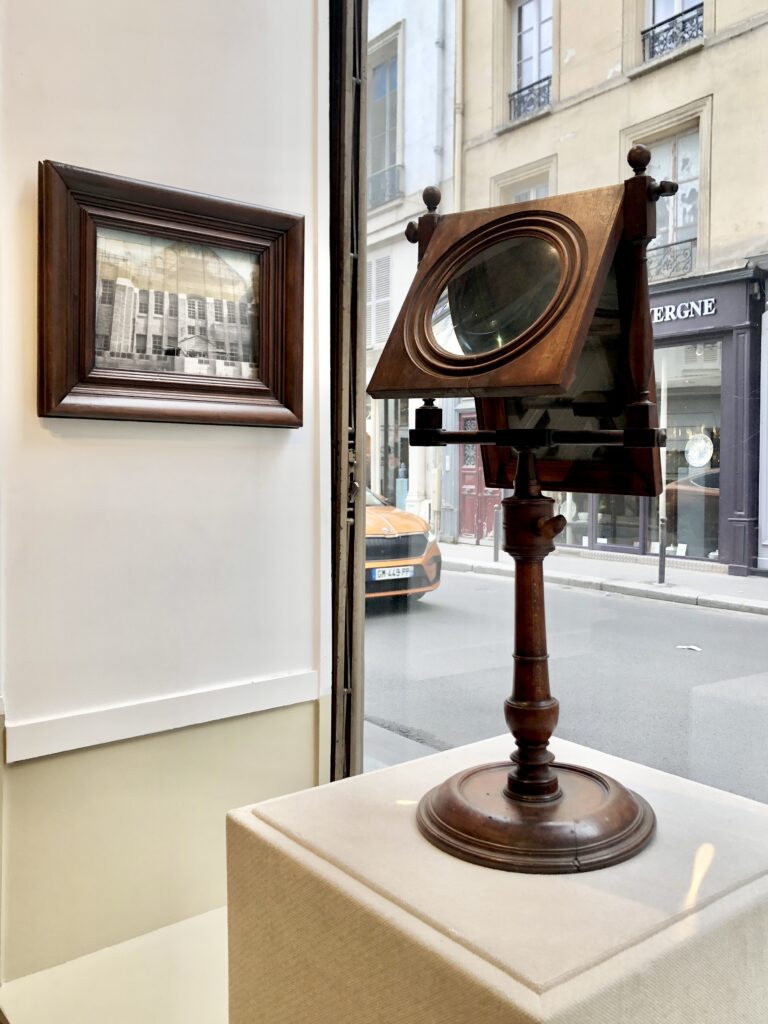
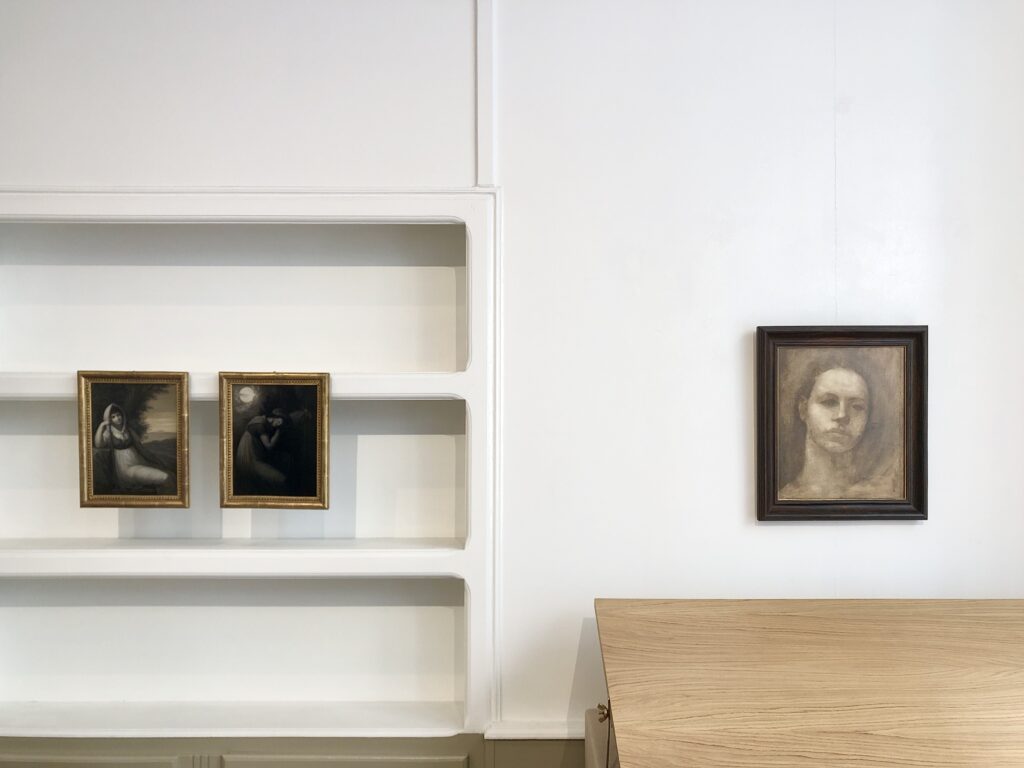
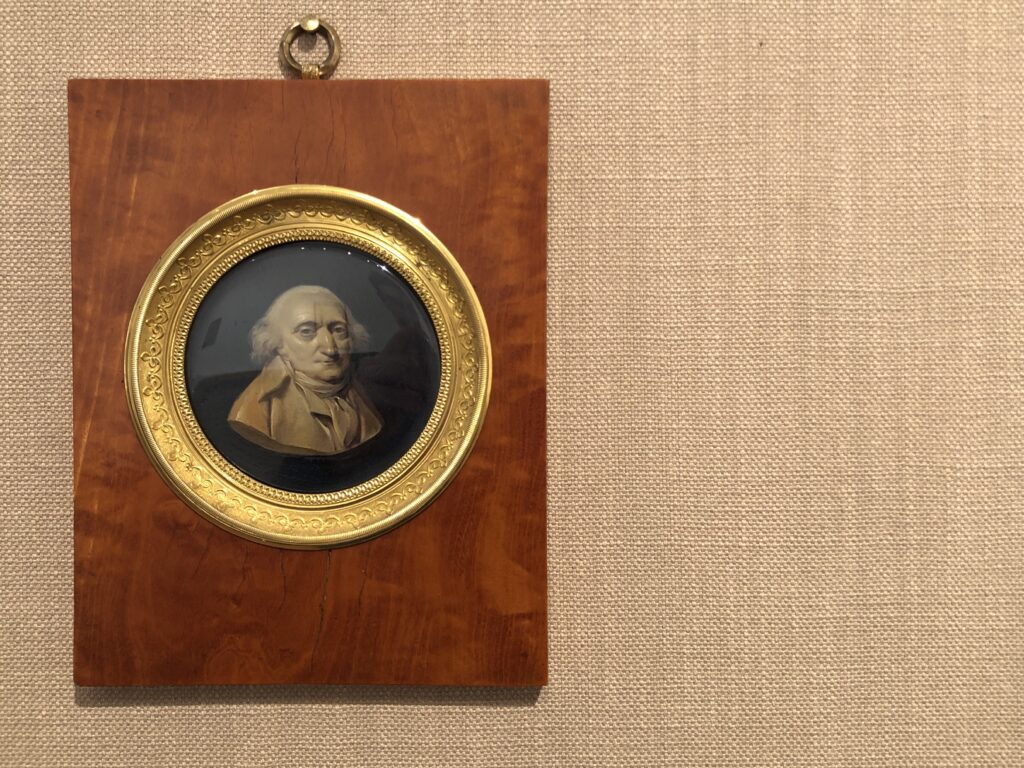
The work of Muyeong Kim is presented here alongside works by Louis-Léopold Boilly (1761–1845), an unclassifiable artist known for his portraits and virtuoso trompe-l’œil. For Kim, Boilly is an emblematic figure of a pivotal era just prior to the invention of photography. His gaze already seems structured by an almost photographic sensibility, as if Boilly anticipated the use of a camera to frame and isolate his subjects. For the exhibition, Kim has selected a series of portraits as well as a zograscope, an optical device composed of a lens and a mirror used to view engravings with an impression of relief and depth — an object that Boilly himself used. This historical ensemble is presented in collaboration with Saint-Honoré Art Consulting (Paris), whom we thank for their generous contribution.
We would also like to thank N/A Gallery (Seoul) for its close collaboration.