
Archives: expositions
les expositions
Oswald Oberhuber
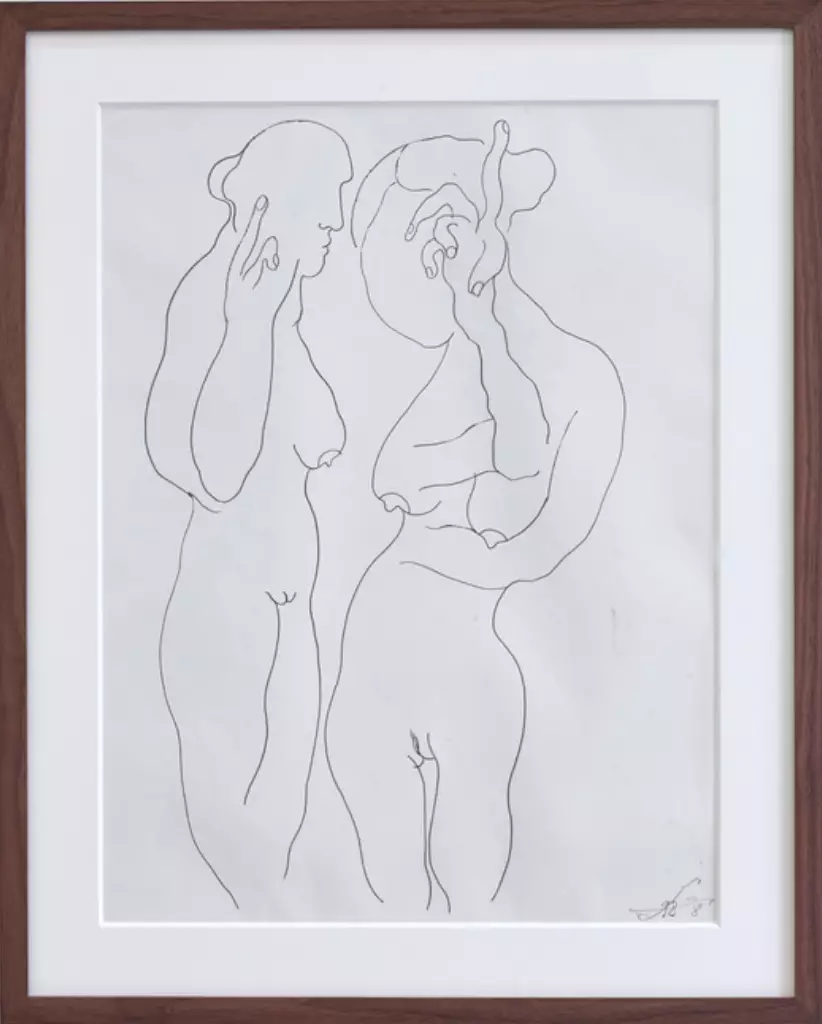
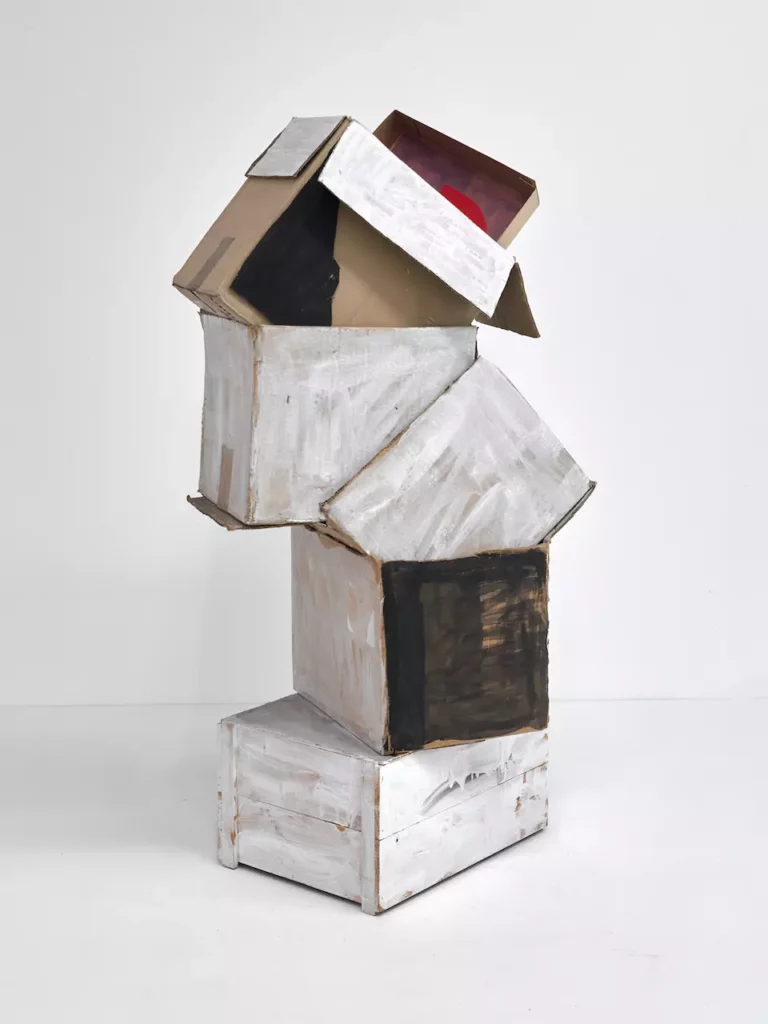
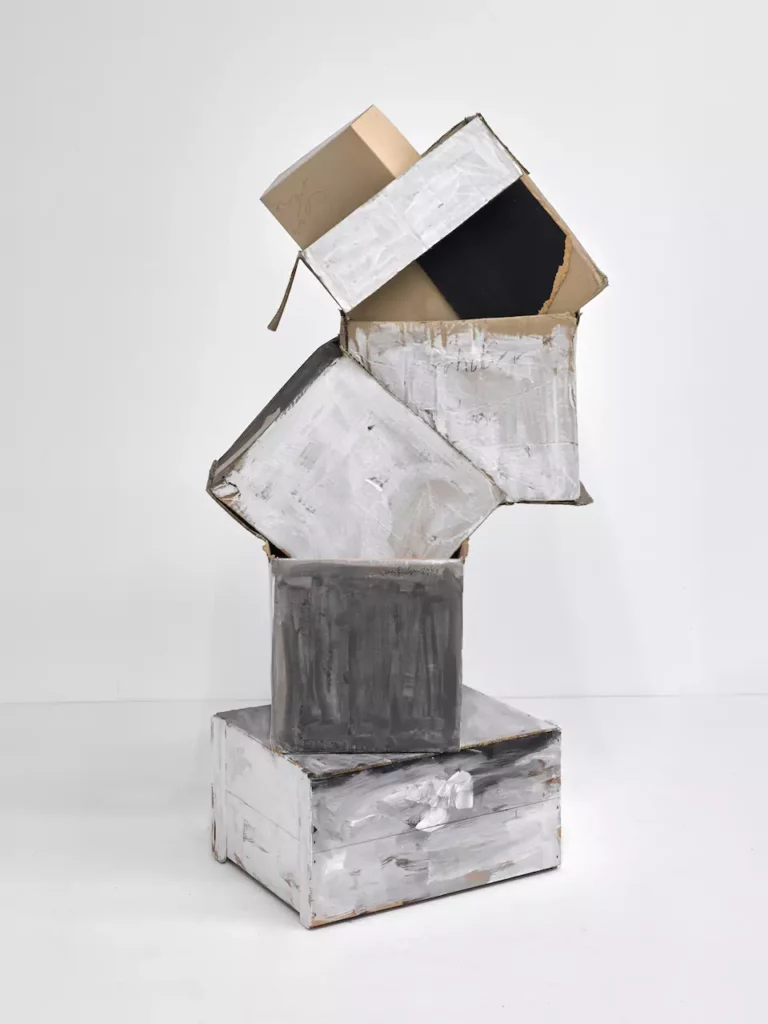
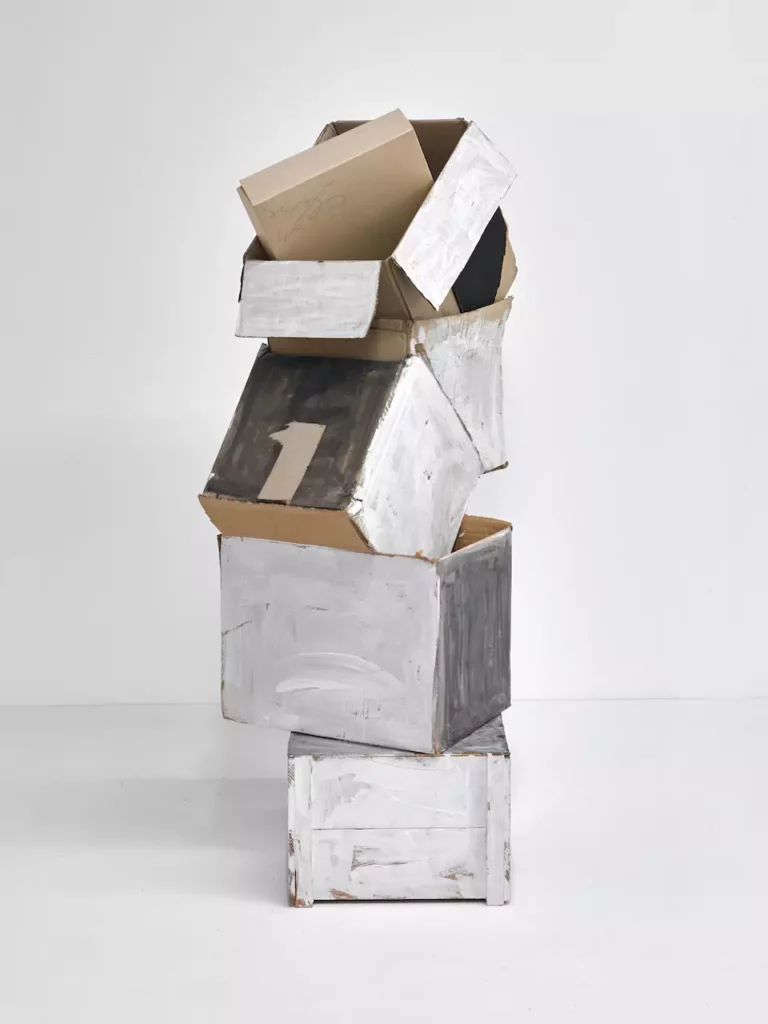
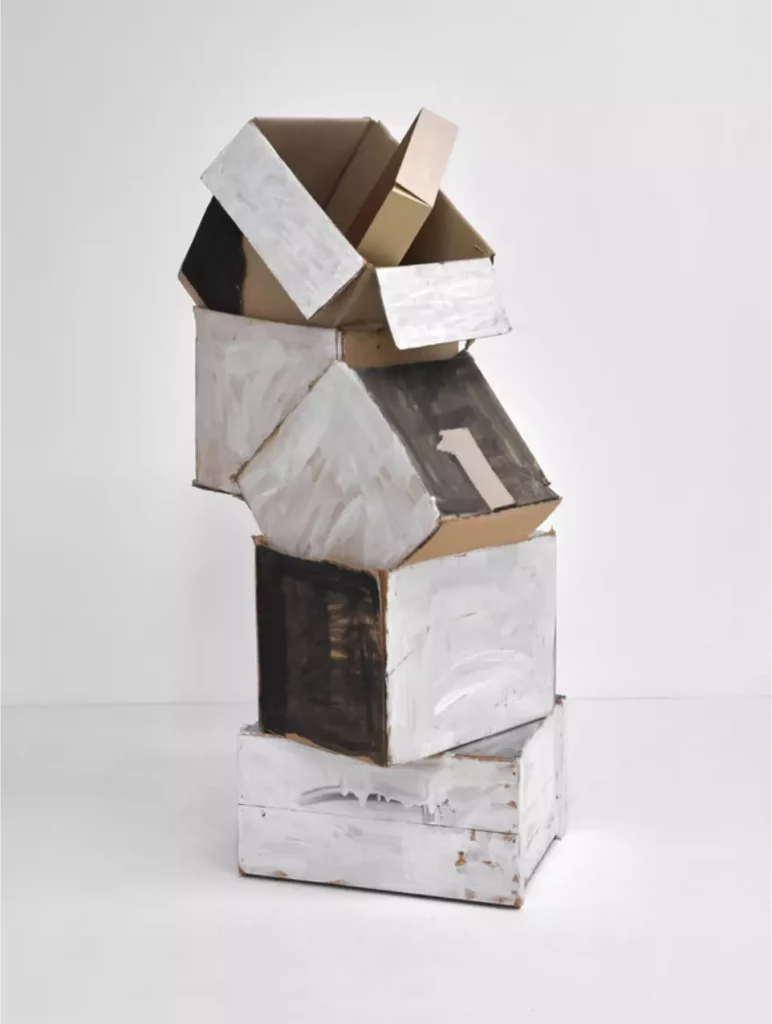
Austrian artist Oswald Oberhuber (1931-2020) found his first inspiration in the post-war movement of informal art. He created sculptures in plaster and bronze that interpreted in three dimensions this new painting that advocated the expressiveness of the material and the spontaneity of the gesture. Borrowing from Leon Trotsky the concept of “permanent revolution”, the artist declared in 1956 that the absence of form is the general maxim of his artistic practice, as well as an attitude towards life. He makes then of the “permanent change” the watchword of his negation of the aesthetic and social norms. In this way, his rebellious work opens up to recurrent transformations throughout his career, seizing all mediums and moving from one style to another: conceptualism, realism, Pop-influenced paintings, assemblage and collage, political posters. As a gallery owner and exhibition organizer, Oberhuber has led more than 600 projects, some of which have been important innovations in Austrian contemporary art. As a long-time professor and rector of the University of Applied Arts in Vienna, he also influenced the cultural and educational policies of his country, shaping the artistic conduct of several generations.
Oswald Oberhuber represented Austria at the Venice Biennale in 1972 and participated in Documenta 6 (1977), Documenta 7 (1982) and the São Paulo Biennale (1983).
For this new exhibition, Abraham&Wolff is showing a cardboard sculpture and a nude drawing in collaboration with the KOW gallery (Berlin), which bear witness to this free and anarchistic approach.
Isa Melsheimer and Alfredo Barbini
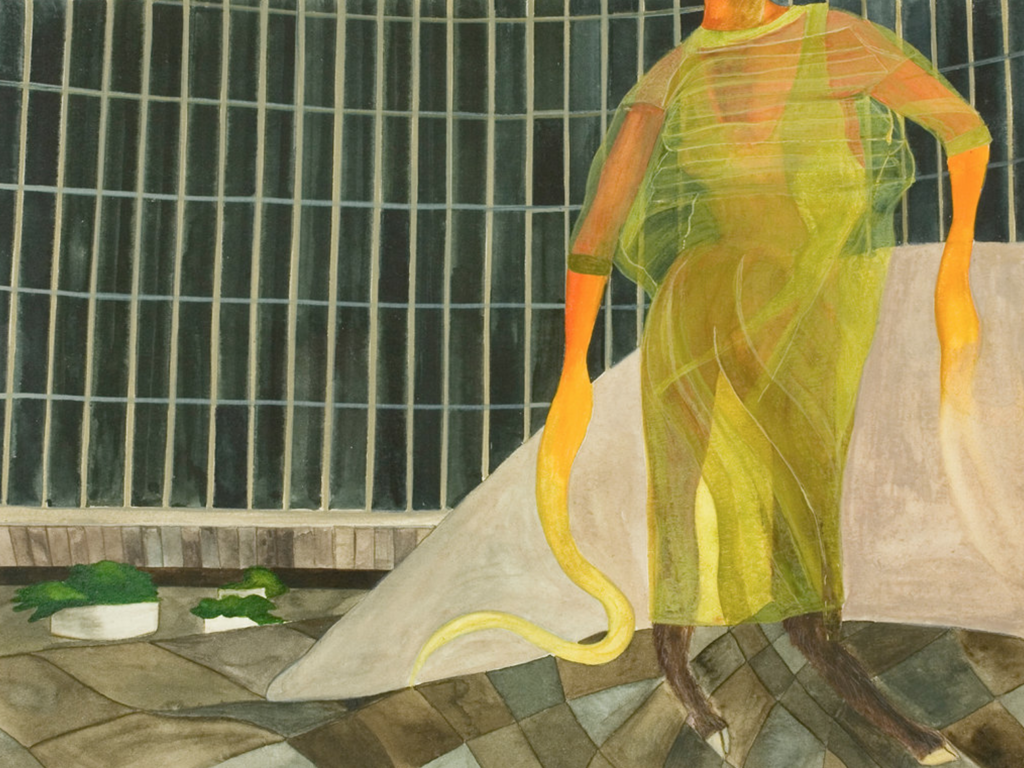
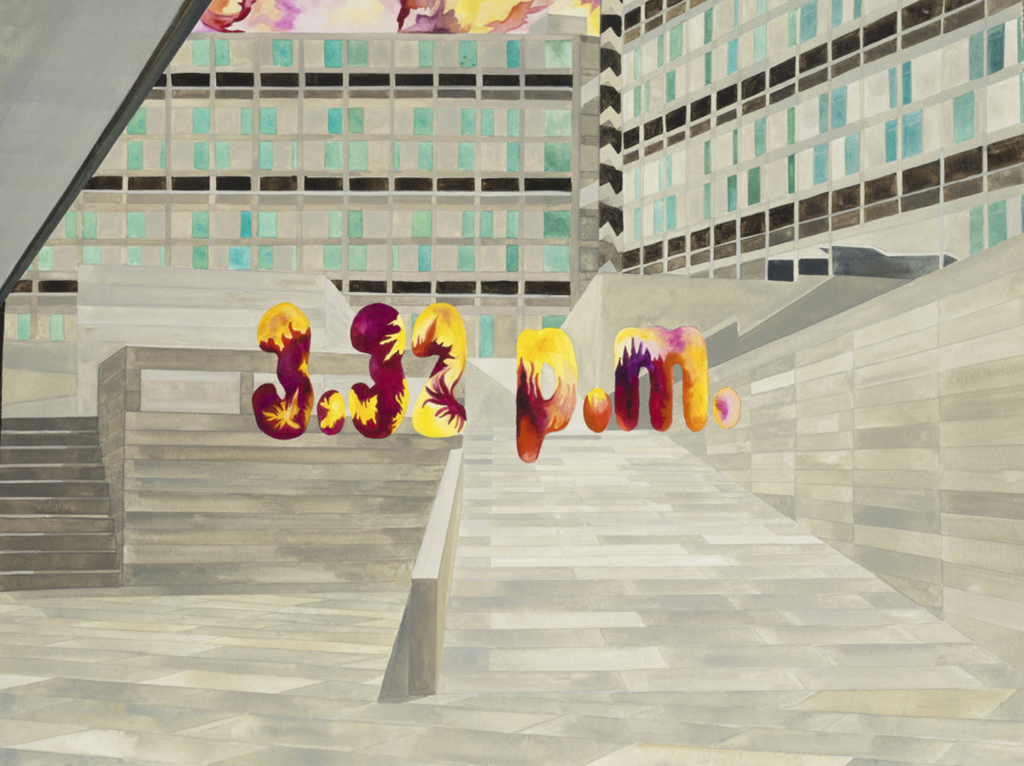
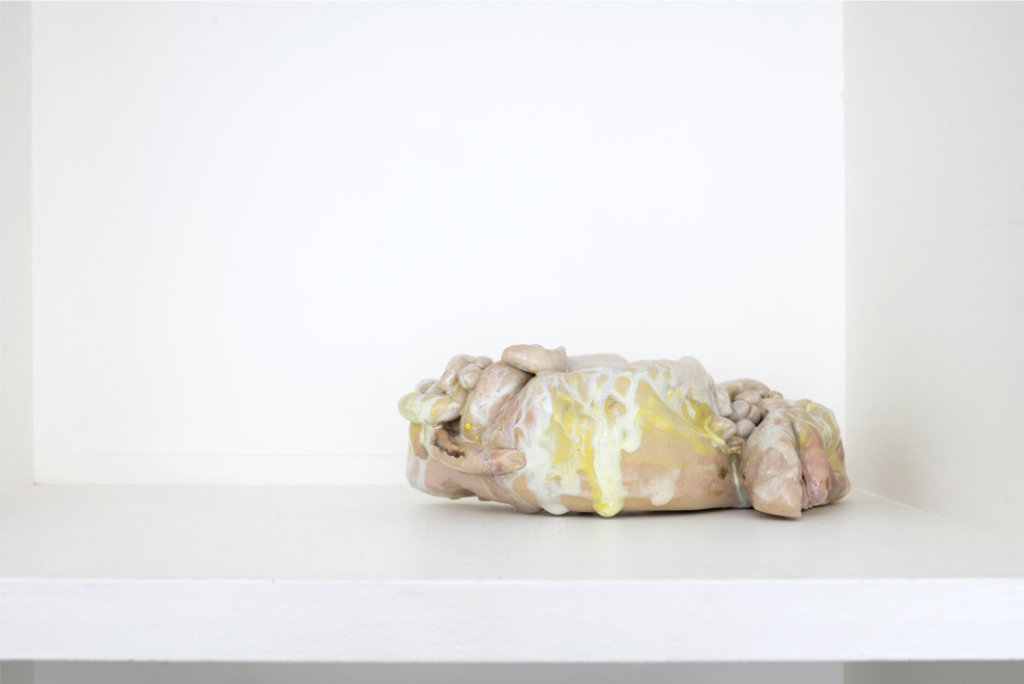
Berlin-based artist Isa Melsheimer (b. 1968) has been developing a complex body of work for several years that questions the interactions between humanity and the plant and animal world, exploring the architectural and environmental expressions of these interactions.
Drawing from the history of architecture and urbanism, references ranging from Le Corbusier’s urban utopia to the reflections of the metabolic movement and abandoned buildings, she creates sculptures that mix concrete, ceramics and glass to form miniature architectures in which the inert matter of building materials is invaded, parasitized and phagocytized by primary forms of life or plants that seem to reclaim their right to these buildings. In the manner of science fiction stories that also inspire the artist, these sculptures offer us a disturbing vision of the future where the question of our sustainability, our survival in the age of capitalism and the end of utopias is raised.
In parallel to this sculptural work, Isa Melsheimer elaborates works based on textiles, botanical worlds blossoming in glass boxes, but also gouache drawings that continue this reflection on the metabolic interaction between nature and humanity.
The showcase of the gallery hosts a selection of drawings representing deserted modernist buildings, around which wild animals sometimes roam. These representations invite us to reflect, without didacticism, on our relationship to inhabitable space, the place we occupy in it and that which we leave to the rest of the living world. They stand next to the swaddled ceramics from theBacteria series, small objects in the form of bubonic masses that evoke organisms infected by a virus.
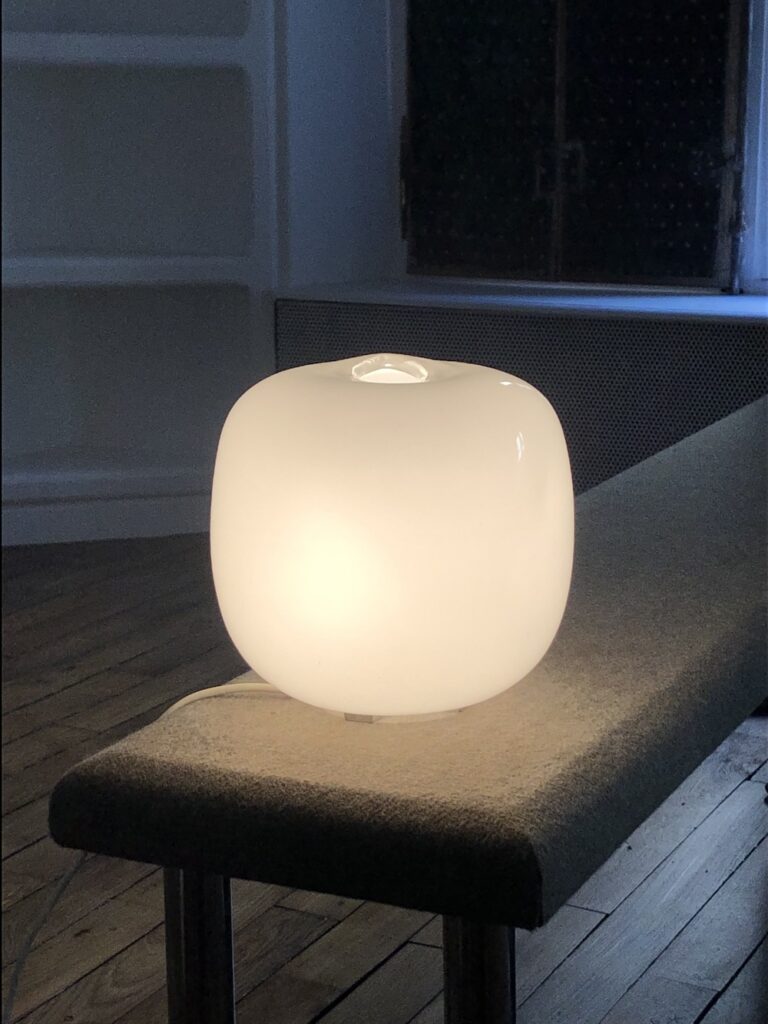
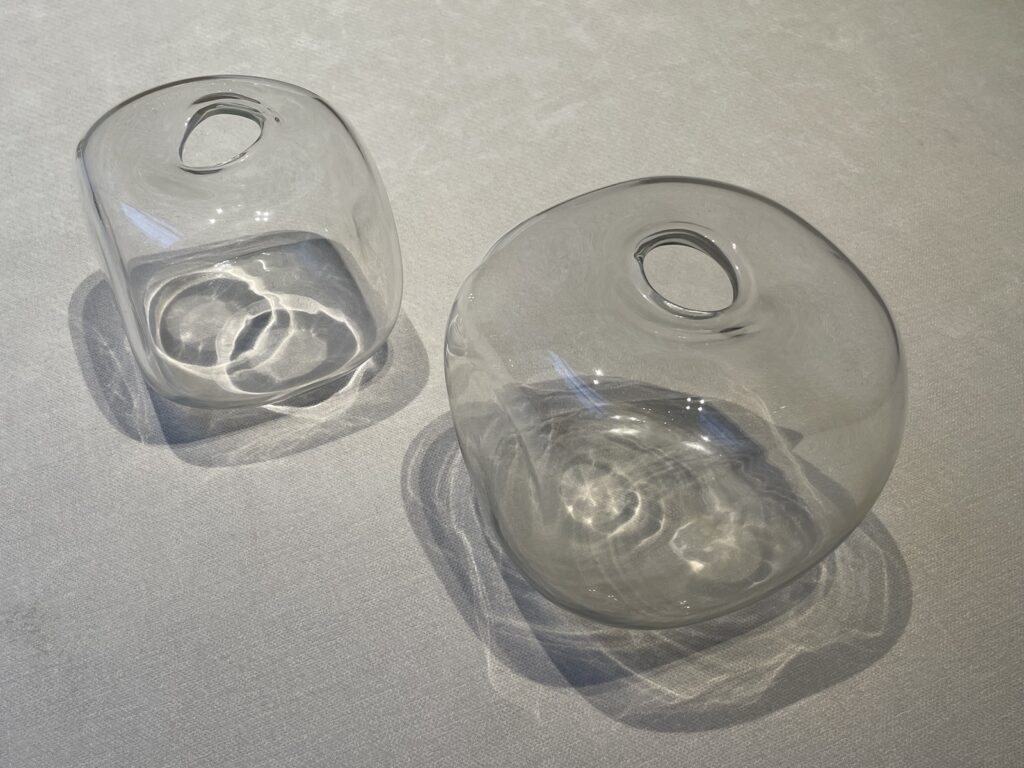
These works are exhibited alongside a set of cubic vases by the master glass artist Alfredo Barbini (1912-2007), an outstanding technician and inspired designer, a leading figure in post-war Murano, twice awarded at the Venice Biennale for his glass sculptures, as well as a lamp imagined by the Italian designer Paolo Tilche (1925-2003) based on this emblematic cubic vase. These design pieces are offered in collaboration with the Compasso Gallery in Milan.
Laura Lamiel and Franz Erhard Walther
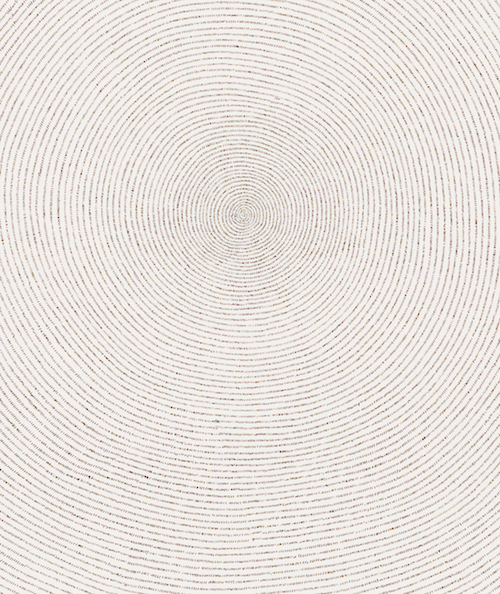
Laura Lamiel (born 1948) is a major French artist who has built up a unique artistic identity over the decades, nourished by psychoanalysis and a certain spiritual cosmology. After devoting the first years of her plastic reflection to painting, she has developed since the 1990s installations that take the form of delimited spaces – cells – inside which the artist arranges furniture, found objects, documents and personal accessories. She thus creates intimate and enigmatic universes at the threshold of which the spectator is invited to stand. Laura Lamiel has never stopped exploring the possibilities of this device. To the spaces made of white enamel and immaculate metal surfaces have been added work tables, open cells in the floor, one-way mirrors, and increasingly complex plays of light, while the biographical and affective charge of the materials used in the composition of these installations has been amplified.
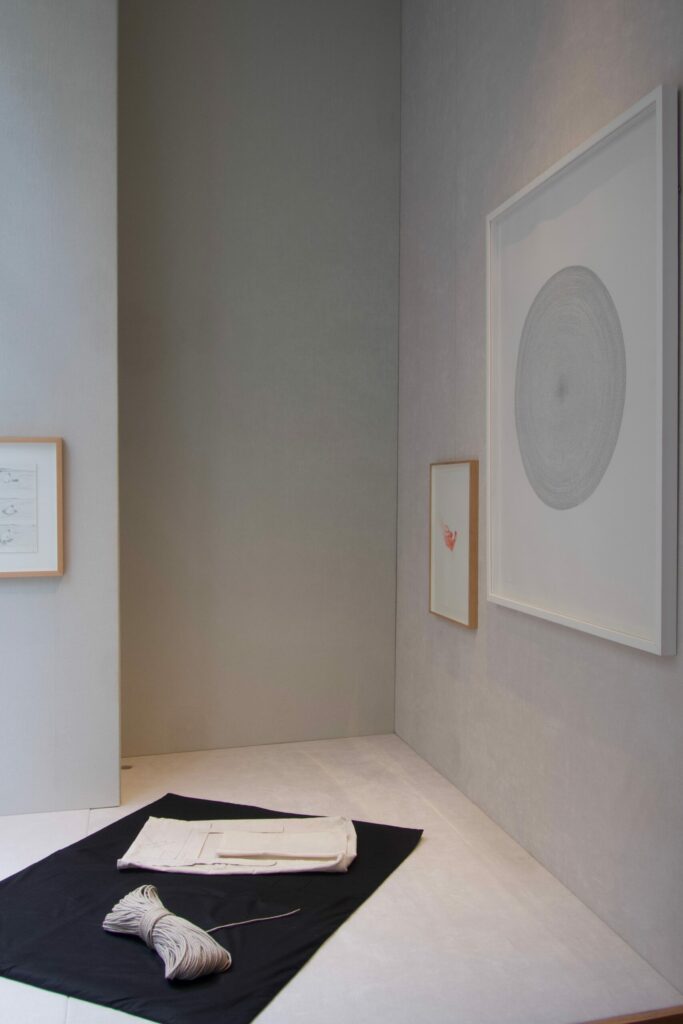
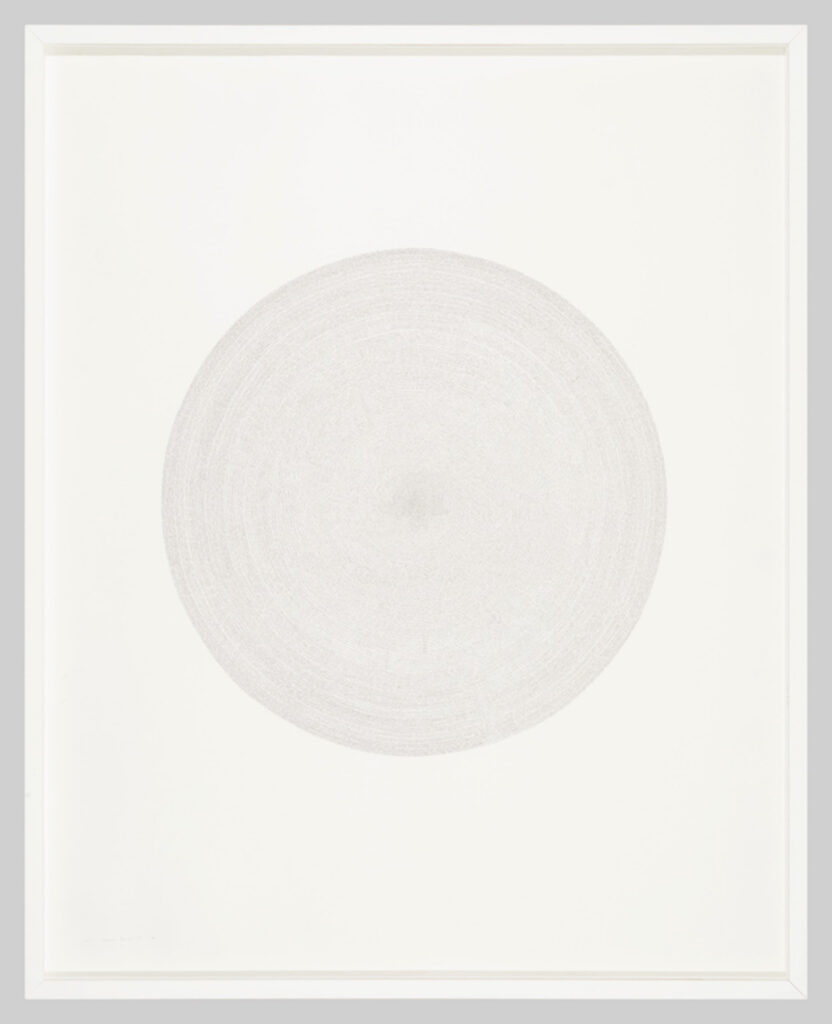
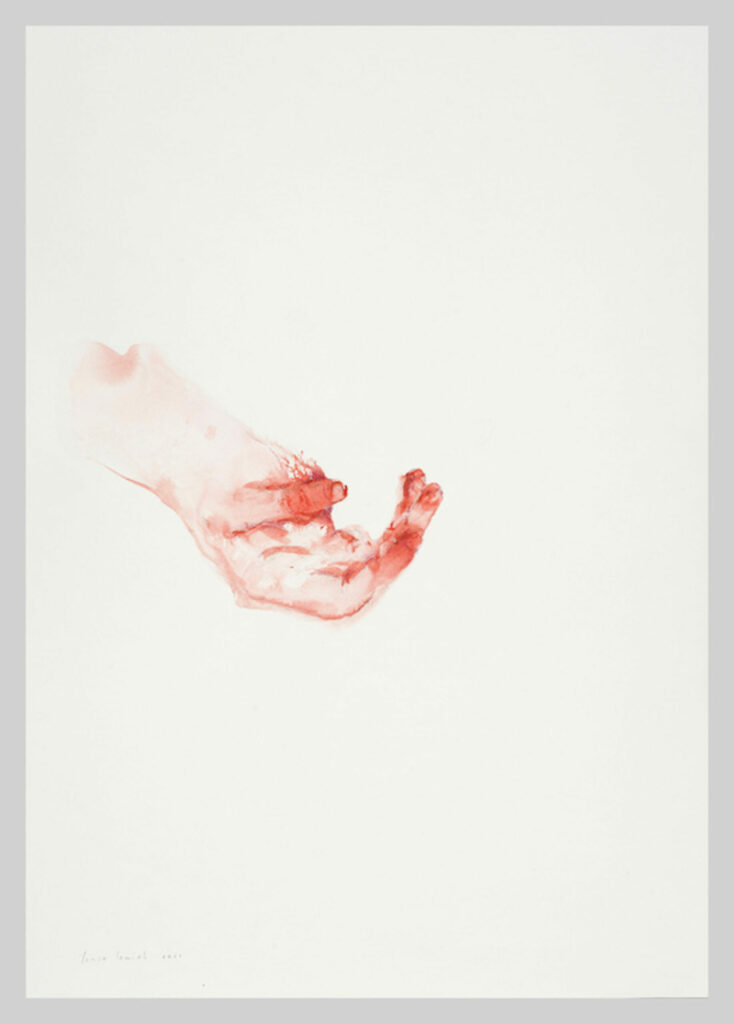
The Abraham&Wolff gallery proposes to explore another facet of this demanding work by exhibiting a series of drawings by the artist in collaboration with the Marcelle Alix gallery. Laura Lamiel describes these drawings as a spontaneous expression that originates in the fundamental elements of her work. Far from constituting a parallel practice, they are an integral part of certain installations where they are placed in tension with other objects. She elaborates an impulsive vocabulary made up of tongues, rhizomes, lungs, eyes or heads that express a certain relationship to violence and to oneself.
This work, representing a hand, made with red Indian ink, from the series Intimate Territories, is a good example. It will be exhibited alongside a more conceptual drawing entitled 3 years, 3 months, 3 days, which is based on the hypothesis of a universe constructed by meditative sounds. Two approaches representative of a work that is both sensitive and mental.
These drawings will be displayed alongside Element n°7 of 1. Werksatz entitled Feld und Teilung (Field and Division), by the German artist Franz Erhard Walther (born 1939).
Franz Erhard Walther
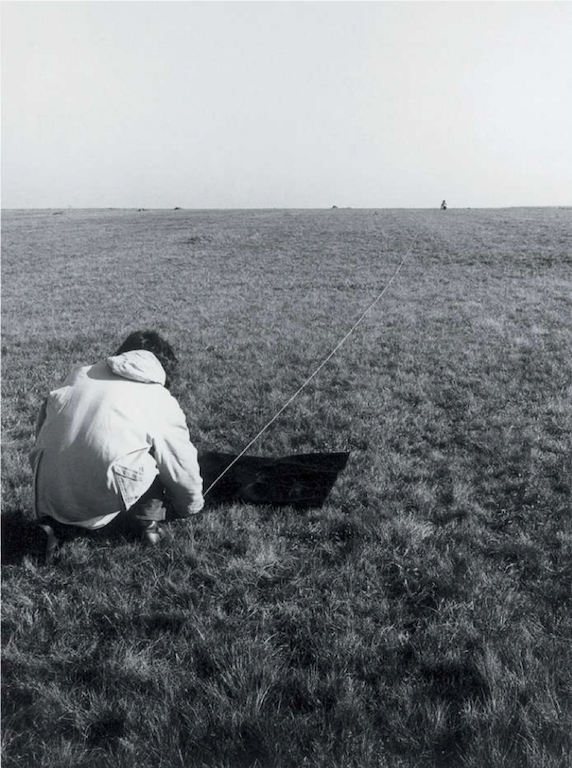
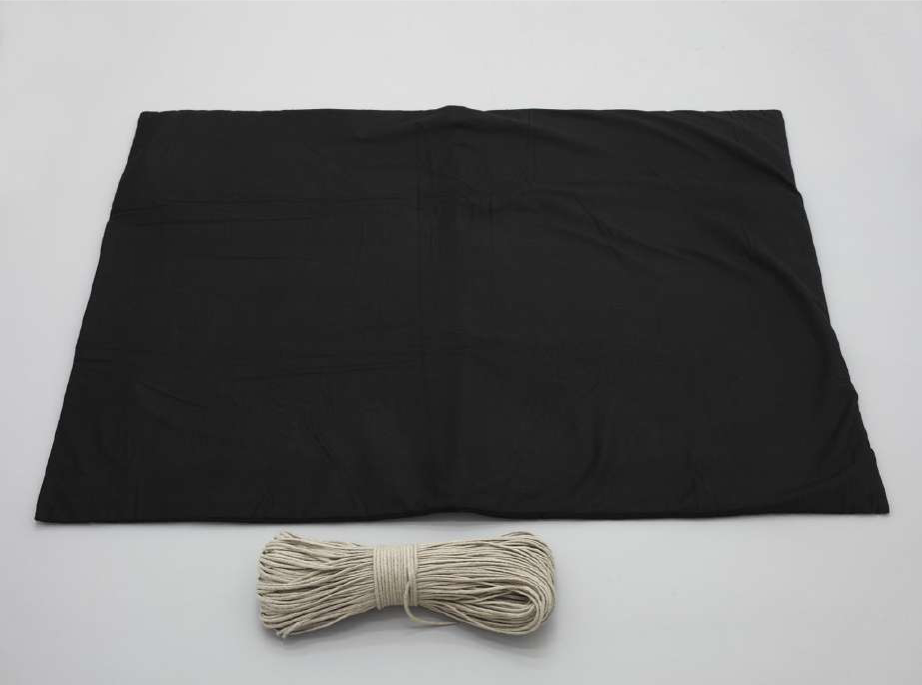
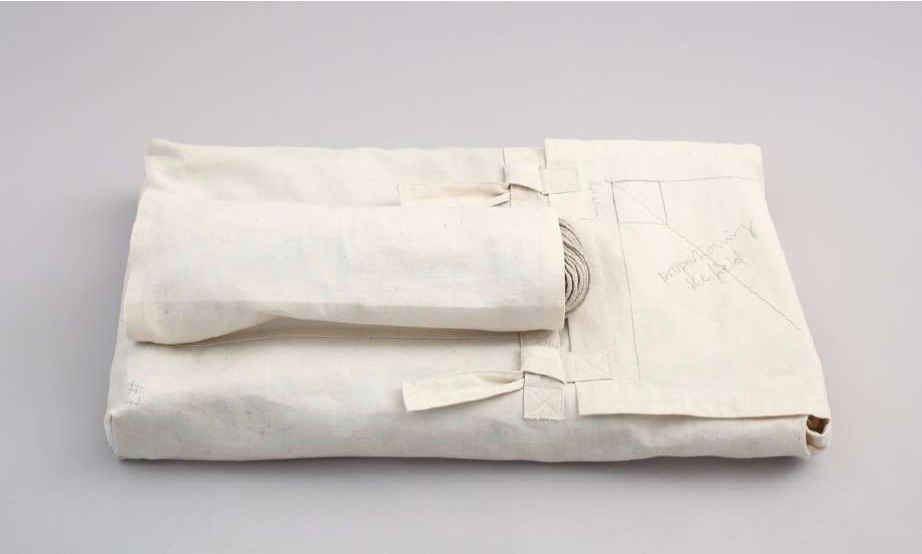
For its first exhibition, Abraham & Wolff will be showcasing the work of the German artist Franz Erhard Walther (born 1939). Walther, who has created a fundamental body of work at the crossroads of minimalism and conceptualism, revolutionised the traditional approach to sculpture by introducing a participatory dimension into his practice. His major work, 1. Werksatz, which he developed between 1963 and 1969, consists of 58 objects designed to be manipulated by spectators-turned-users.
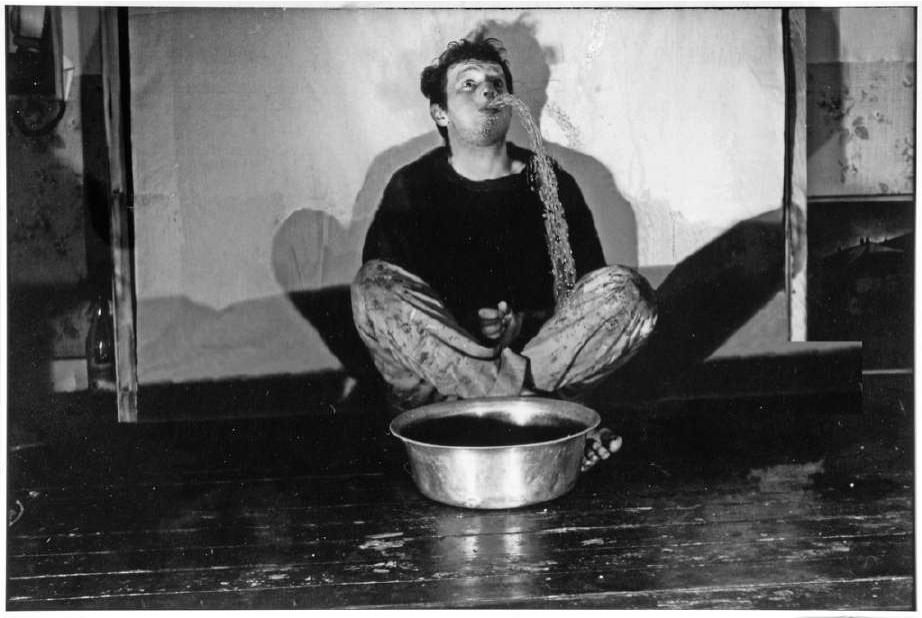
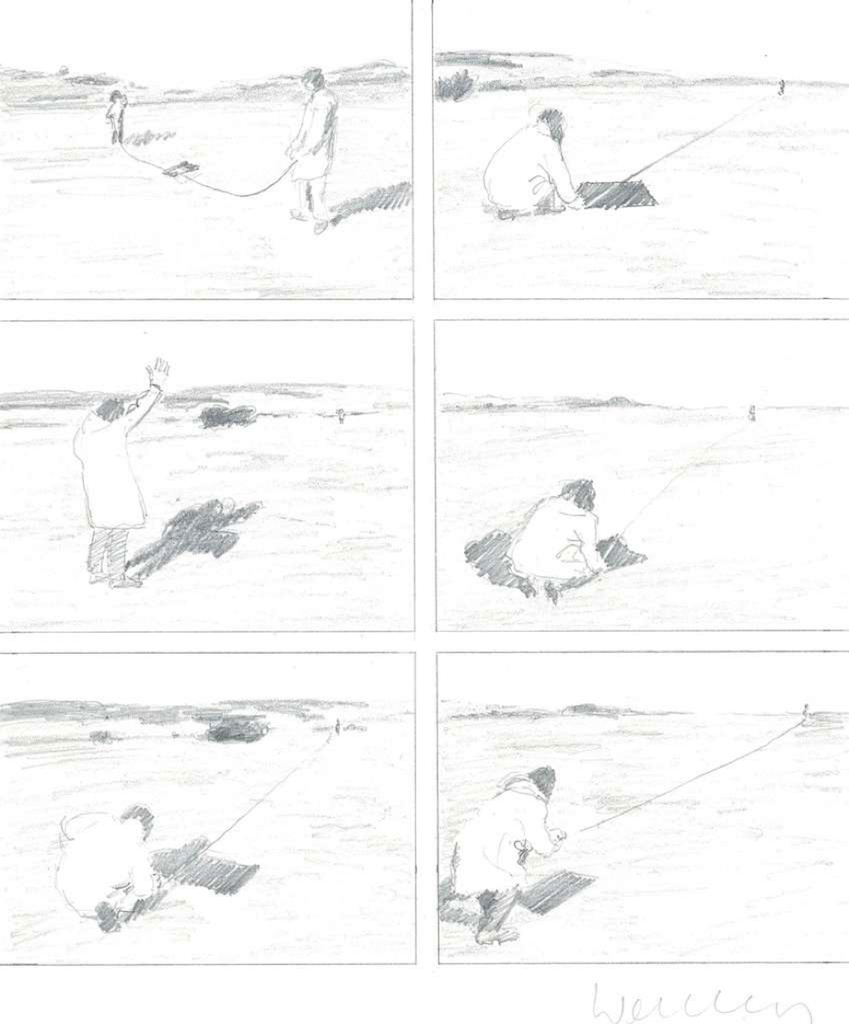
From amongst this exceptional ensemble, Abraham & Wolff will be presenting Element 7, Feld und Teilung (Field and Division), a work designed to be activated outdoors. In a pioneering presentation, this object will be displayed at the same time as an “operating drawing” which explains its activation protocol in the form of a detailed storyboard. These two works will be exhibited alongside a photograph of the artist discussing his first reflections on the work of art as action.